Deputy Minister for Investment, Yuliot Tanjung, said on Thursday that he will prioritize the improvement of the investment climate in the country.
He said that this goal will be realized through intensive consolidation with the relevant ministries and agencies, including plans to change the rules on the investment climate in Indonesia.
Enhancing the Online Single Submission (OSS), a digital business licensing system, will also contribute to improving the investment climate.
He expressed belief that with the improvement in the investment climate, the investment target of Rp1,650 trillion (around US$102.11 billion) will be achieved.
“This target can be achieved in 2024,” he said after being inducted as Deputy Minister of Investment by President Joko Widodo at the State Palace in Jakarta on Thursday.
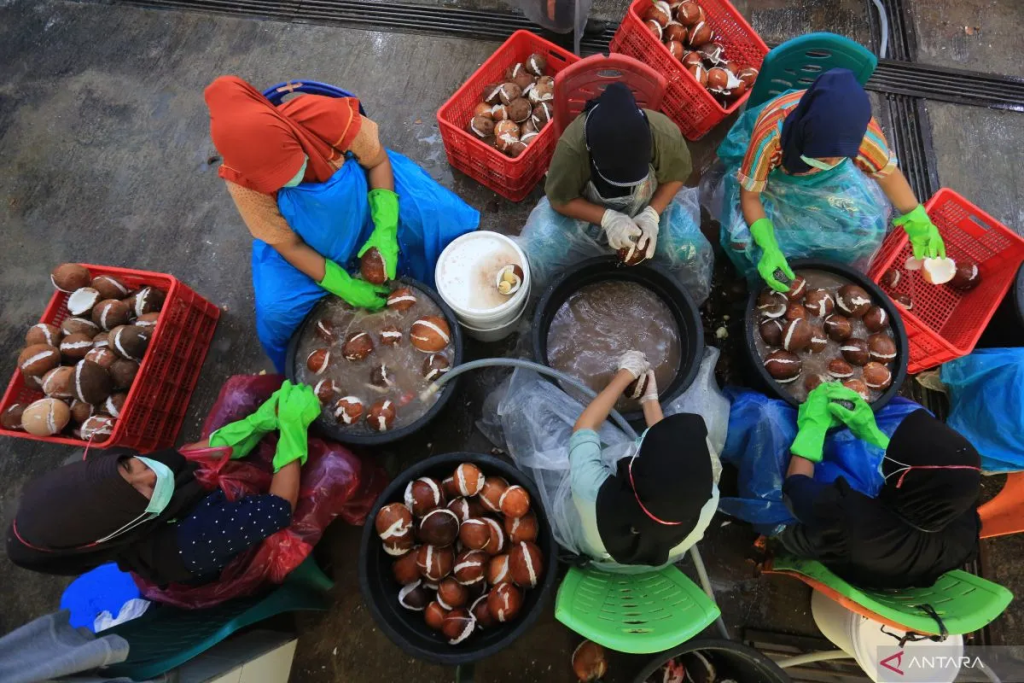
The Ministry of Trade and the International Coconut Community (ICC) are co-hosting the 51st Cocotech international conference and exhibition in Surabaya, East Java, from July 22-25, 2024.
This event, which will take place from July 22–25, 2024, in Surabaya, East Java, aims to propel the development of a green economy for coconut commodities.
Director general of international trade negotiations, Djatmiko Bris Witjaksono, highlighted that the conference will address key global issues impacting the coconut industry.
In a statement released by the ministry in Jakarta on Thursday, he informed that the issues include international policies and support for the development of a sustainable coconut sector.
These include international policies and support for sustainable practices, alongside advancements in technology and the potential of coconut-based renewable energy solutions to combat climate change and reduce reliance on fossil fuels.
According to Witjaksono, the activity will bring together stakeholders from diverse backgrounds, including academics or researchers, government officials, private sector players, and coconut industry observers.
The goal is to collaboratively develop solutions and strengthen the industry’s resilience and long-term sustainability.
Cocotech, a biannual flagship event, serves as a platform for decision-makers within and beyond the coconut sector. This year’s edition prioritizes sustainable practices and the well-being of coconut farmers.
“As the host, Indonesia is expected to be a catalyst for positive change within the coconut industry,” Witjaksono said.
The international conference and exhibition is scheduled to be opened by President Joko Widodo, accompanied by the Minister of Trade, Zulkifli Hasan.
Themed “Utilizing the Potential of Coconut as a Tree of Life and Green Energy,” Cocotech is expected to be attended by 400 participants, consisting of delegates from ICC member and non-member countries, as well as coconut commodity experts from across the world.
Indonesia is the second-largest coconut producer in the world after the Philippines, with total production reaching 2.83 million metric tons (MT) in 2023.
The same year, Indonesian coconut exports to the world were valued at US$1.55 billion, accounting for 38.3 percent of total global exports.
The main export destinations for Indonesian coconuts include China, Malaysia, and Singapore.
Indonesia’s main export products in the coconut sector consist of coconut oil derivatives, coconut oil, coconut milk, coconut charcoal, and grated coconut.
Indonesian women’s singles badminton player Gregoria Mariska Tunjung said she did not know how to feel after winning bronze at the Paris Olympics, after Spain’s Carolina Marin decided to withdraw due to injury.
On Sunday, Gregoria was defeated by South Korea’s An Se-young in the semifinals. She would have fought other semifinalists, either Carolina Marin or China’s He Bingjiao.
Carolina, who withdrew from the competition, has made Gregoria get the bronze medal without playing.
“This is confusing. It is very wrong if I feel happy over other people’s suffering,” Gregoria said. “This is an unfortunate event for Marin, but I do not know how to react, like I do not want this to happen.”
“To be honest, I am grateful for the medal, but I am not really happy,” she added.
Gregoria’s bronze medal is Indonesia’s first medal at the 2024 Paris Olympics and also the first medal for the country’s women’s singles after Maria Kristin won bronze at the 2008 Beijing Olympics.
Her coach, Herli Djaenudin, said that it has been a while since Indonesia’s women’s singles badminton won a medal.
Chairman of the Indonesian National Olympic Committee (NOC Indonesia), Raja Sapta Oktohari, said that Gregoria’s medal is not simply given to her but because of her struggles.
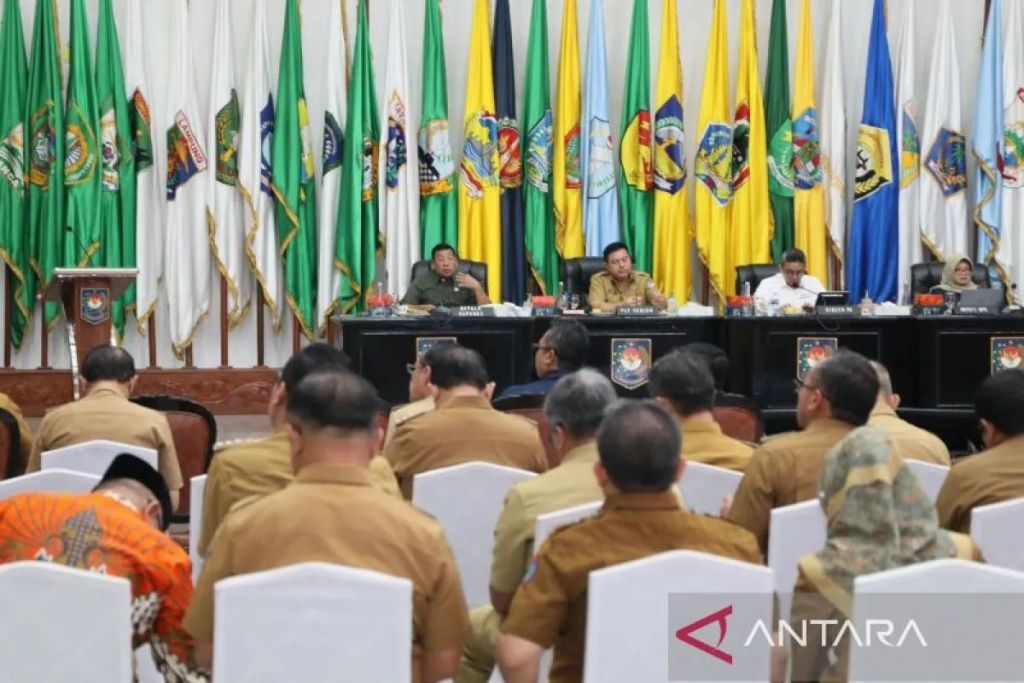
Acting secretary general of the Ministry of Home Affairs, Tomsi Tohir, has asked regional governments to support the construction of the Herbal and Horticulture Science Technology Park (TSTH2) in North Sumatra.
He made the request during the Coordination Meeting on Regional Inflation Control in Jakarta on Monday.
He informed that the infrastructure will serve as a modern center for research and development through genomic technology implementation.
It was said that a garden of national herbal medicinal plant collections originating from all over Indonesia would be developed there.
Tohir underlined that the Ministry of Home Affairs has a role in supporting and disseminating information regarding the efforts of ministries, agencies, and regional governments to accelerate TSTH2 development.
“Through an official letter, regional governments are urged to send seedlings of endemic herbal plants from their respective regions,” he said.
He also outlined several things that must receive attention from regional governments. For instance, the provincial office that handles agriculture, environment, and forestry affairs must coordinate and record endemic herbal plant seedlings sent for the garden.
Meanwhile, district heads and mayors have been asked to instruct the office that handles agriculture, environment, and forestry affairs to send endemic plant seedlings by no later than the fourth week of August 2024.
The TSTH2 development is a program of the Coordinating Ministry for Maritime Affairs and Investment.
Tohir urged the coordinating ministry to provide clear guidelines regarding the delivery of the seedlings, including the contact person who will provide explanations when regional governments experience difficulties or require further information.
He asked regional governments to carefully identify the types of herbal plants in their regions. The plants that are sent will also be studied further at the TSTH2 to determine their benefits.
The regeneration of human resources in the agriculture sector — marked by the emergence of young farmers and better mastery of technology — is necessary, especially in food centers in Indonesia.
Of course, the emergence of young farmers must be accompanied by prudent food policies that can accommodate the needs for successful cultivation and harvest.
Food sovereignty means giving farmers the freedom to develop the type of cultivation they are interested in, which adapts to climate and land conditions, while business entities and the government play a greater role in providing facilities and support.
According to head of the Agricultural Extension and Human Resources Development Agency of the Ministry of Agriculture, Dedi Nursyamsi, innovation and technology are key to boosting agricultural production with the ultimate goal of realizing food self-sufficiency.
However, to reach food self-sufficiency, sovereignty must always be the basis.
Sovereignty is important to create excellent agricultural human resources. Various experiences show that many farmers do not continue farming because of crop failure. Thus, the government is very careful in fostering farmers, especially young people, to encourage them to continue pursuing their respective fields of expertise.
Innovation and technology in agriculture must continue to be introduced to farmers in regions. This is because today’s farmers, in addition to being technologically literate, are also more likely to adopt new technologies and innovations. They are the ones who will decide the best technology and innovation to use.
For example, corn is one of the commodities that support national food self-sufficiency. Developing quality corn seeds must ensure they meet the criteria, namely, they must be resistant to stem borer pests and herbicide-tolerant.
That way, farmers’ production can multiply, while the cost of fertilizers can be reduced. This could eventually boost farmers’ enthusiasm to carry out planting activities.
According to data from Statistics Indonesia (BPS), the production of dried corn kernels with 14 percent water content reached 14.77 million tons in 2023.
With the help of policies, the government is continuing to push for an increase in national corn production to achieve food self-sufficiency.
This increase in production is in line with Indonesia’s target of becoming the world’s food hub by 2045, when it is expected to not only meet domestic needs, but also carry out exports.
To reach the target, in addition to extensive and fertile agricultural lands, the country also needs human resource improvement, farmer regeneration, adequate infrastructure, good regulations, and agricultural technology innovations.
To increase sovereignty, the innovations and technologies offered must provide added value. This would allow farmers in the field to feel that their farming results can provide more income for their families.
According to Imam Sujono, seed marketing head of agrochemical company Syngenta Indonesia, beginning farmers are willing to use the latest technology and innovation if they have used them directly in the field and have seen the results themselves. Therefore, the role of extension workers is very important to introduce technologies and innovations to farmers.
For instance, seeds are often introduced using a demonstration plot system, under which demonstration plots are created so that farmers can see the superiority of a variety for themselves.
The use of high-quality superior seeds is the main key to successfully realizing food self-sufficiency. Without quality seeds, farmers will not be able to achieve optimal production, especially amid the challenges of climate change, limited fertilizers, and attacks by pests and plant diseases.
Farmers are hoping that existing technologies and innovations can provide advantages, including making it easier to take care of plants, cheaper costs as they will not need to use pesticides and human resources, and greater results.
The presence of superior seeds could not only optimize farmers’ harvests but also make farmers more confident about farming.
Farmers in the country are also more careful in adopting technologies and innovations, including in using superior seeds. They study the harvest results of the seeds and even discuss them with other farmers.
According to chairperson of the Andalan Farmers and Fishers Community (KTNA), young farmers currently have a high awareness of increasing production by utilizing innovations and technologies.
Therefore, it is the obligation of the government and companies engaged in agriculture to conduct continuous research for the emergence of technologies and innovations, especially for superior seeds.
This is considered necessary given the increasingly diverse pests and extreme climates that demand the use of superior seeds that can guarantee successful harvests.
Guidance for beginning farmers is also a solution to food self-sufficiency, particularly education that is based on geographical conditions and the carrying capacity of the environment.
In Jakarta, the provincial government’s policies to realize food self-sufficiency need a mature strategy considering that the availability of agricultural lands in the province is limited.
In addition, not all residents understand crop cultivation. There are only a few who do, such as residents who live on permanent cropland in East Jakarta and West Jakarta.
Collaboration with farmers in rice and corn production centers is a smart step to build food self-sufficiency there.
As a center for the development of technologies and innovations, Jakarta must carry out interventions in partner regions so that they achieve large production of premium quality.
Furthermore, in the province’s Seribu Islands, reaching food self-sufficiency by utilizing agricultural lands requires mature planning. It is necessary to study the islanders’ mastery of agriculture in depth. If the local government wants to develop an agricultural center, it is better to start with something that is easy to learn, while also taking into account the interests of residents.
The residents of Seribu Islands are mostly working as fishers and seaweed farmers, while some are working in the tourism sector. Thus, to make one of the islands a food center, forethought, for instance, regarding seeds, climate, and irrigation, is needed.
“Kami sangat optimis Jakarta akan semakin maju, meski tidak lagi menjadi IKN. Tentu, bila dikelola dengan baik, transparan dan nir korupsi, maka pendapat asli daerah (PAD) bisa melonjak berkali lipat,” kata Ketua Umum Kamar Dagang dan Industri (Kadin) DKI Diana Dewi kepada ANTARA di Jakarta, Sabtu.
Menurut Diana, tantangan terbesar Jakarta setelah menanggalkan status Ibu Kota adalah kesiapan sumber daya manusia (SDM).
Ia menilai SDM berkualitas dan profesional penting untuk mendukung target Jakarta sebagai kota global.
“Kota global harus diisi oleh orang-orang yang memiliki kemampuan lebih, profesional serta mental yang kuat,” katanya.
Sebagai induk organisasi dunia usaha, khususnya di DKI Jakarta, Kadin DKI juga turut mendukung penyiapan SDM unggul di Ibu Kota.
Berbagai pelatihan, sertifikasi hingga pendampingan pengembangan usaha juga terus diberikan Kadin DKI untuk mendukung kalangan dunia usaha, termasuk sektor usaha mikro kecil dan menengah (UMKM).
“Sejak awal memimpin Kadin DKI Jakarta, penyiapan SDM unggul terus dilakukan melalui pelatihan-pelatihan. Juga, memberi ruang pengembangan usaha, baik di dalam maupun luar negeri,” kata Diana.
Sebelumnya, Penjabat (Pj) Gubernur DKI Jakarta Heru Budi Hartono mengatakan Jakarta akan fokus meningkatkan sumber daya manusia (SDM) yang unggul, produktif, dan sejahtera untuk mewujudkan stabilitas kota yang tangguh.
Dengan SDM unggul dan ekonomi yang kokoh, pada 2045, Jakarta diharapkan mampu bersaing dengan kota global lainnya.
Sebelumnya, Badan Pusat Statistik (BPS) Provinsi DKI Jakarta mengumumkan perekonomian DKI Jakarta tumbuh sebesar 4,96 persen secara kumulatif sepanjang 2023.
Plt. Kepala BPS Provinsi DKI Jakarta Dwi Paramita Dewi merinci pertumbuhan ekonomi 2023 relatif melambat jika dibandingkan dengan 2022 yang mencapai pertumbuhan ekonomi sebesar 5,25 persen.
Pada triwulan IV-2023 yaitu Oktober hingga Desember 2023, kinerja ekonomi Jakarta tumbuh sebesar 4,85 persen dibandingkan periode yang sama tahun sebelumnya atau triwulan IV-2022.
Sementara itu, jika dibandingkan dengan periode sebelumnya, yaitu triwulan III-2023, ekonomi Jakarta pada triwulan IV-2023 juga tumbuh sebesar 2,6 persen.
Mengetahui saldo minimal dan potongan di bank merupakan hal penting. Ini agar saat menabung atau melakukan transaksi lainnya bisa lebih maksimal.
Saldo minimal merupakan saldo paling sedikit yang harus tersedia di satu rekening. Itu artinya, saldo Anda akan tertahan atau mengendap di rekening tabungan.
Masing-masing bank memiliki kebijakan yang berbeda untuk menetapkan minimum saldo di rekening nasabah. Bahkan, tiap jenis tabungan di satu bank saja bisa memiliki batas minimal saldo yang berbeda.
Beberapa bank menggunakan sisa saldo tersebut sebagai biaya penutupan rekening tabungan yang tidak aktif. Ada juga bank yang menggunakannya agar menjaga rekening tabungan nasabah tetap aktif.
Lantas berapa besaran saldo minimal yang harus ada pada rekening? Berikut ketentuan saldo minimal big bank RI.
BCA
– TabunganKu: Rp 20.000
– Simpanan Pelajar: Rp5.000
– Tahapan Xpresi: Rp10.000
– Tahapan: Rp50.000
– Tapres: Rp5.000.000
– BCA Dollar: US$100 atau S$200
Bank Mandiri
– Tabungan Rupiah: Rp 100.000
– Tabungan NOW: Rp 25.000
– Tabungan Payroll: Rp 10.000
– TabunganKu: Rp 20.000
– Tabungan TKI: Rp 10.000
– Tabungan Mitra Usaha: Rp 1.000.000
– Tabungan SiMakmur: Bebas biaya
– Tabungan Simpanan Pelajar (SimPel): Rp 5.000
BNI
– BNI Taplus: Rp 150.000
– BNI Taplus Bisnis: Rp 1.000.000
– BNI Taplus Pegawai: Sesuai Perjanjian Kerjasama (PKS)
– BNI Taplus Muda: Tidak dikenakan saldo mengendap
Inggris menghadapi krisis perumahan karena lebih dari 150.000 anak tinggal di akomodasi sementara. “Skandal nasional” ini diungkap Menteri Perumahan Angela Rayner, sebagai mana dimuat RT dari BBC, Jumat (9/8/2024).
Hal itu merujuk statistik resmi yang dirilis oleh Kementerian Perumahan, Komunitas, dan Pemerintah Daerah Kamis. Di mana ditunjukkan sebanyak 151.630 anak tinggal akomodasi sementara seperti hostel dan bed and breakfast (B&B), hingga Maret.
“Kami menghadapi krisis perumahan paling akut yang pernah ada dan tuna wisma masih mencapai rekor tertinggi. Ini tidak lebih dari skandal nasional,” kata Rayner dalam sebuah pernyataan.
“Tindakan mendesak harus diambil untuk memperbaikinya,” katanya.
Menurut asisten direktur operasi di penyedia perumahan Riverside, anak-anak tunawisma di Inggris saat ini jumlahnya melebihi jumlah penduduk di tempat-tempat seperti Ipswich (151.565), Blackpool (149.070) dan York (141.685), Dave Robinson. Ada lebih banyak anak tunawisma di B&B sementara sejak program tersebut dimulai pada tahun 2004, dan jumlah mereka telah meningkat sebesar 15% sejak Maret 2023.
Perlu diketahui, B&B hanya dimaksudkan untuk menampung keluarga dalam keadaan darurat hingga maksimal enam minggu. Tetapi “ribuan” rumah tangga dengan anak-anak telah tinggal di sana jauh lebih lama.
“Mereka menghabiskan berbulan-bulan atau bahkan bertahun-tahun hidup di dalam koper dan tidak dapat menetap,” kata kepala eksekutif lembaga amal perumahan Shelter Polly Neate.
“Tingginya penggunaan akomodasi sementara merupakan hasil dari kegagalan kebijakan nasional yang memaksa dewan untuk menangani konsekuensi tunawisma secara mahal daripada mencegahnya sejak awal,” kata juru bicara perumahan untuk Jaringan Dewan Distrik, Hannah Dalton.
Pemerintah Inggris yang kini dipimpin Partai Buruh diketahui juga sedang bekerja sama dengan para pemimpin lokal untuk mengembangkan strategi jangka panjang guna mengakhiri tunawisma untuk selamanya. Sebagai bagian dari strategi ini, Kementerian Keuangan menjanjikan peningkatan besar dalam pembangunan rumah sosial dan terjangkau untuk satu generasi.
Di mana program itu menghapuskan penggusuran tanpa alasan. Akan ada jutaan poundsterling dihabiskan untuk menyediakan rumah bagi keluarga yang paling berisiko.
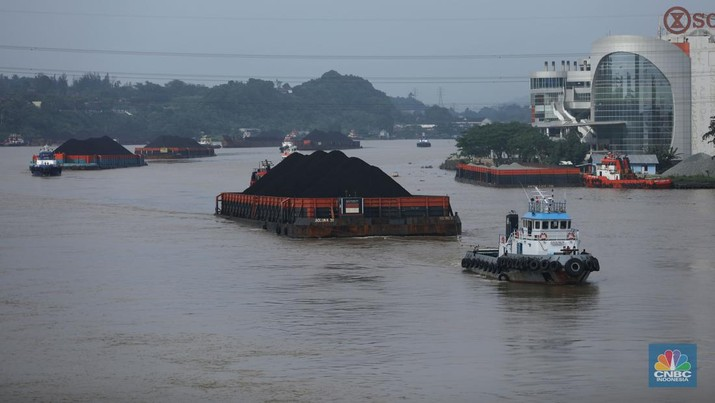
Harga batu bara kembali melesat dalam lima hari beruntun menyentuh level tertinggi dan mempertahankan posisi tertinggi selama tiga bulan terakhir.
Melansir data Refinitiv, harga batu bara acuan ICE Newcastle kontrak September pada penutupan perdagangan Rabu (7/8/2024) menguat 0,27% menjadi US$ 147,90 per ton.
Artinya, harga batu bara sudah menguat lima hari beruntun dengan penguatan mencapai 6%. Harga penutupan kemarin juga menjadi yang tertinggi sejak 2 Mei 2024 atau lebih dari tiga bulan.
Apresiasi harga batu bara dalam beberapa hari terakhir disinyalir berkat prospek permintaan batu bara yang meningkat jelang akhir tahun.
Melansir dari Mining,com, sebuah kelompok industri batubara utama di Tiongkok mengatakan pada hari Rabu bahwa mereka memperkirakan impor batubara tahun ini akan mencapai setidaknya 500 juta metrik ton, melebihi rekor tertinggi sebelumnya dan perkiraan para pelaku pasar.
Sementara itu, sejumlah konglomerat di Indonesia masuk dalam daftar orang terkaya karena bisnis batu bara. Berikut raja tambang RI yang dirangkum oleh CNBC Indonesia:
Dato’ Low Tuck merupakan seorang pengusaha Indonesia sekaligus pemilik PT Bayan Resources Tbk (BYAN), salah satu perusahaan yang bergerak di sektor tambang batu bara. BYAN merupakan emiten batu bara dengan kapitalisasi terbesar di bursa domestik. Tercatat kapitalisasi pasarnya saat ini mencapai Rp 658,33 triliun.
Kiki Barki merupakan pendiri emiten pertambangan batubara, PT Harum Energi Tbk (HRUM) pada tahun 1995 dan perusahaannya listing di Bursa Efek Indonesia (BEI) di tahun 2010. Kiki Barki menguasai 79,79% saham PT Harum Energy Tbk (HRUM), yang berdiri sejak 1995.
Selain Harum Energy, Kiki juga memiliki tambang batubara milik swasta, Tanito Harum. Saat ini, putra sulungnya, Lawrence Barki, menjalankan Harum sebagai presiden komisaris sementara putra bungsunya, Steven Scott Barki, menjadi komisaris.
Pada 2022, Forbes mencatat nilai kekayaan bersih Kiki sebesar US$ 1,9 miliar atau setara dengan Rp 29,6 triliun. Tahun lalu US$ 1,41 miliar atau Rp 21,92 triliun dan menempatkan dirinya sebagai orang terkaya ke-33.
Tjia Han Pun alias Edwin Soeryadjaya terlahir pada 17 Juli 1949 setelah kedua orangtuanya kembali dari Negeri Belanda. Ketika kelahirannya, perang Indonesia-Belanda perlahan mereda. Ketika itu, ayahnya William Soeryadjaya masih merintis bisnisnya, membangun Astra.
Sekitar 1997-1998 Edwin bersama Sandiaga Uno mendirikan perusahaan keuangan Saratoga Investama Sedaya. Dimana dia menjadi pemimpin tertinggi perusahaan itu setelah Indonesia dilanda krisis moneter. Saratoga termasuk perusahaan keuangan yang kemudian berkembang.
Setelah tahun 2000 pertambangan batu bara menggeliat di Indonesia. Edwin Soeryadjaya pun belakangan masuk ke dalam bisnis ini. Seperti sepupunya yang pernah aktif di Astra juga, Theodore Permadi Rachmat alias Teddy Rachmat yang terlibat dalam pendirian perusahaan batubara Pama Persada.
Pada 2022, Forbes mencatat kekayaan Edwin senilai US$ 1,8 miliar atau setara dengan Rp 28,05 triliun. Kemudian pada 2023, Edwin tercatat sebagai orang terkaya ke-39 dengan harta US$ 1,24 miliar atau setara Rp 19,27 triliun.